
Criminal Cases in the Oneida County Courts
Oneida County is part of Idaho's Sixth Judicial District. The District Court hears felony trials. Its Magistrate Division handles misdemeanors, infractions, initial appearances, bail review, and felony preliminary hearings. Both sit at the Oneida County Courthouse in Malad City. The clerk is the custodian for complaints, motions, minutes, orders, judgments, and certified copies. Malad City advertises no separate municipal-court search, so a city citation should be checked through the same county and statewide channels.
The Oneida County courts page links court services, while the clerk can be reached at (208) 766-4285. Court records show what prosecutors filed and what judges decided. They do not replace the sheriff's incident report or Caribou County's booking entry.
The county's official court landing page gives a useful view of that local structure.
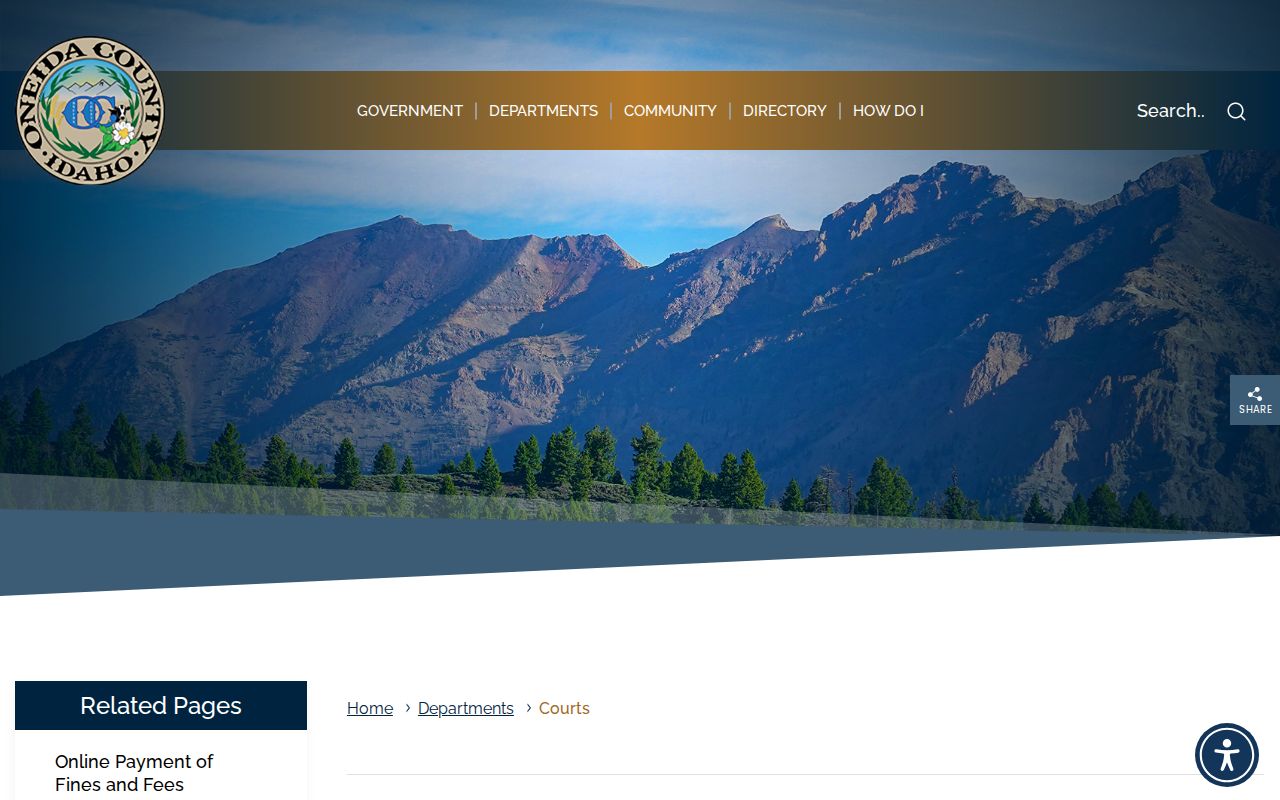
Its links route Oneida County users into Idaho's unified services rather than a stand-alone local docket.
Oneida Criminal Court Jurisdiction
“Felony court” and “misdemeanor court” describe different work within one local court system. A felony can begin before a magistrate for an initial appearance and preliminary hearing, then move to District Court after an information or other charging step. Misdemeanors generally remain in the Magistrate Division. Idaho does not sort all felonies into letter classes, so read the charge statute and judgment rather than importing labels used by another state.
| Oneida County court | Criminal work | Record source |
|---|---|---|
| District Court | Felony trial, judgment, sentence | iCourt and county clerk |
| Magistrate Division | Misdemeanors, infractions, first appearances, preliminary matters | iCourt and county clerk |
| Clerk of District Court | Kiosk, copies, certification, file requests | 10 Court Street, Malad City |
How to Search Case Records
Begin with the free Idaho iCourt Portal Smart Search. A full record number is the best key. A party-name search can find a case when the number is unknown, but common names need a check against county, filing date, case type, and event history. The portal supplies basic public information, not every filed document.
- Open Smart Search and enter a full case or record number when one is known.
- Otherwise enter the party name, using a wildcard or advanced filters to narrow the result.
- Confirm that the result belongs to Oneida County and review the case type, filing date, and status.
- Open the event history, charges, hearings, disposition, judgment, sentence, and financial entries that are public.
- Use the courthouse kiosk or request the actual file and certification from the Oneida County clerk.
| Field label | Type | Required | Notes |
|---|---|---|---|
| Smart Search | Text | Yes | Full case number or party name |
| Case/record number | Text mode | Optional | Pattern such as CR-2016-1234 |
| Party name | Text mode | Optional | Wildcard searches are supported |
| Advanced Filtering Options | Expandable | No | Narrows displayed case attributes |
| Submit / Reset | Buttons | No | Runs or clears the search |
The official Smart Search screen shows the single statewide entry point.
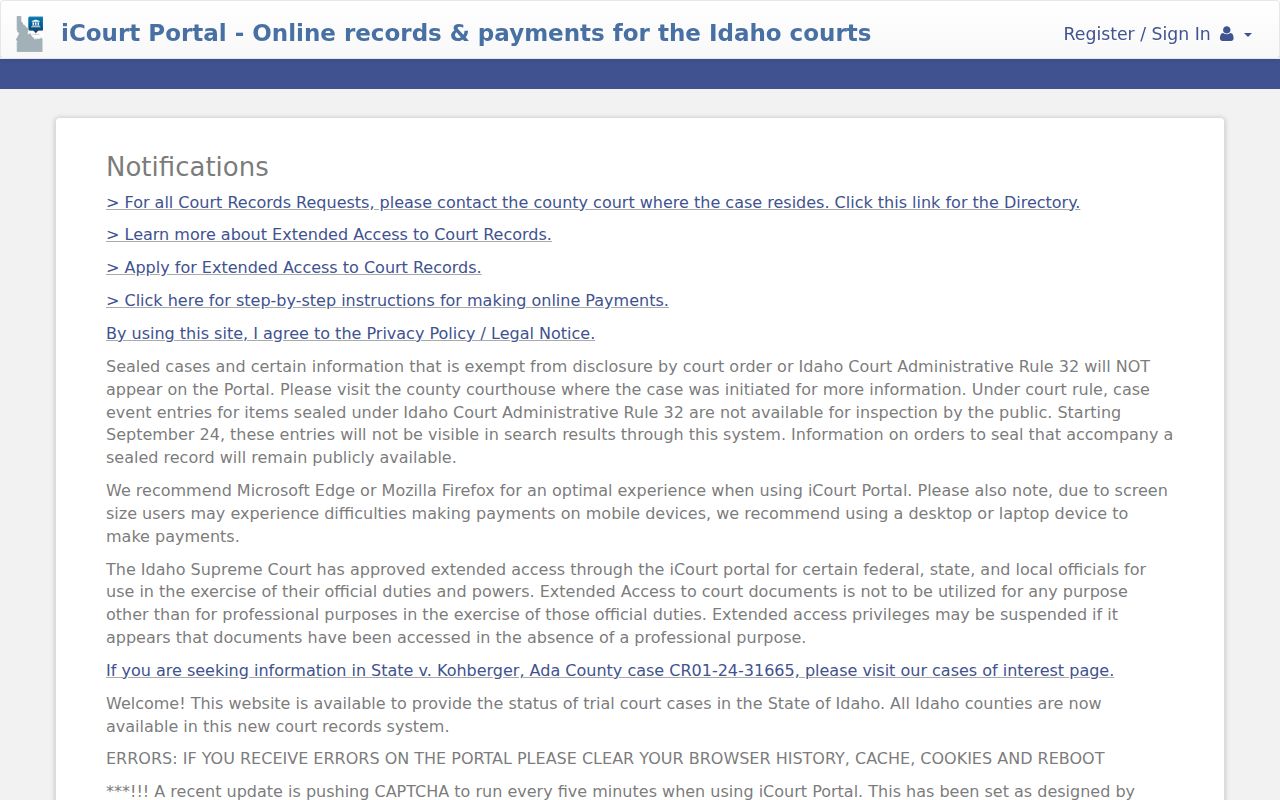
That interface can locate an Oneida County summary, but the clerk remains the source for pleadings and certified copies.
Oneida Legacy Case Number Traps
The official iCourt search tutorial uses the pattern CR-2016-1234. It also warns that some legacy searches work only after zeros following the case type or year are omitted. A failed exact-number search should therefore be retried with the official format and then by party name. Reset old criteria before the next attempt.
The tutorial also explains wildcard, party, case, and public warrant searches.
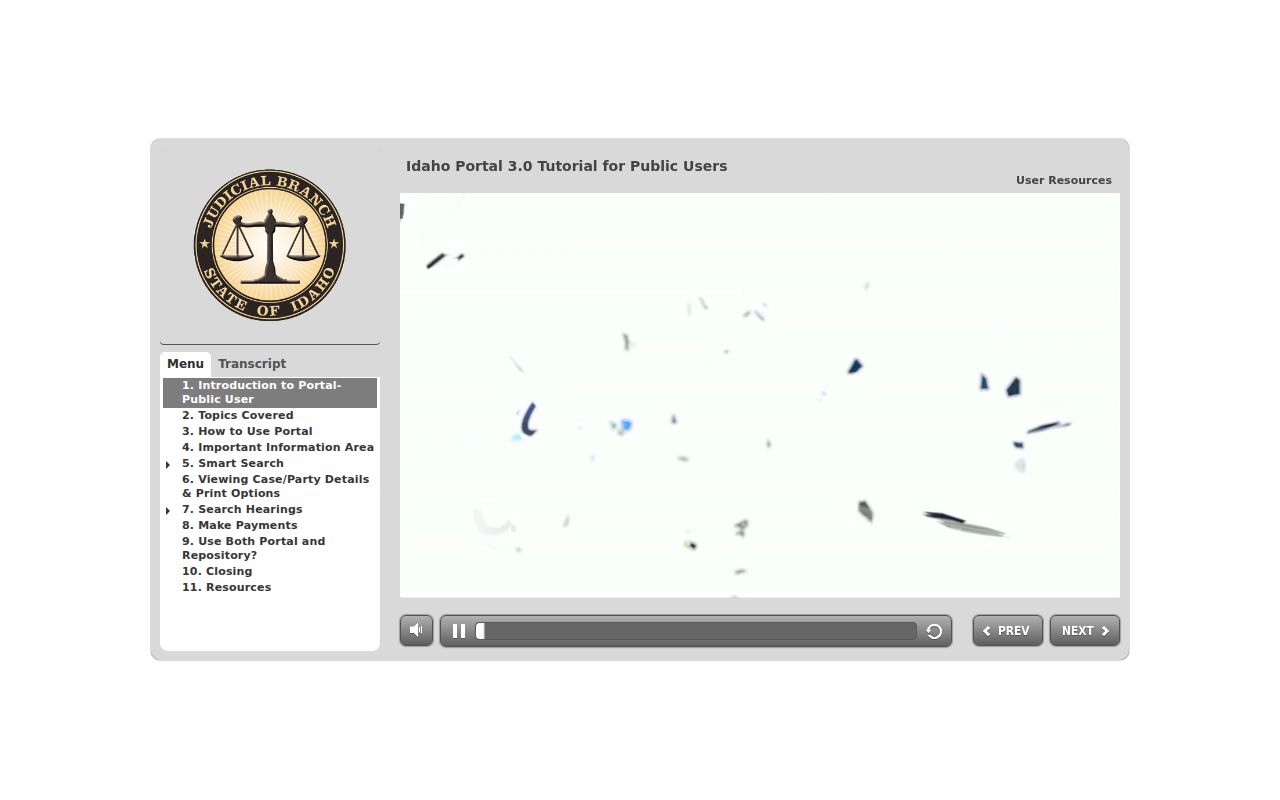
These controls help separate a format problem from a record that is sealed, exempt, or not yet entered.
Note: “No results” can reflect spelling, a legacy-number issue, filing lag, or restricted access, not proof that no case exists.
What the Case File Shows
A public Oneida County case summary centers on the prosecution, not the booking. Read each count because an arrest charge may be amended, rejected, dismissed, or replaced. A case marked disposed may contain counts with different outcomes. The judgment is stronger evidence of the result than a charge line or an old hearing entry.
| Case Number & Court | Identifies the file, county location, division, and case type. |
|---|---|
| Charging Document | The complaint, information, or other filed allegation and its counts. |
| Docket Entries | A dated list of filings, hearings, minutes, motions, and orders. |
| Hearing Dates | Scheduled time and place when public through the portal. |
| Disposition & Judgment | The outcome of each count and the court's formal adjudication. |
| Sentence & Conditions | Custody, probation, fines, restitution, and other terms made public. |
Rule 32 generally makes indexes, case summaries, calendars, minutes, pleadings, motions, orders, and judgments open, subject to specific restrictions and the portal's limits.
Oneida Criminal Charges After Booking
A charge written at Caribou County Jail records what was presented during intake. It does not lock the Oneida County prosecutor or court into that same wording. Prosecutor review may produce fewer counts, a different statute, or no filed case. The judicial allegation is the complaint or information in the clerk's file, and the final result appears later in the disposition and judgment.
This distinction is crucial when dates and labels vary across records. Match the sheriff's agency number and arrest date to the court case number, then follow every count through its last event. The prosecutor's official page states that the office handles felony and juvenile matters countywide. Its named contractor notice ended in 2024, so readers should call county administration at (208) 766-4116 extensions 3004 or 3005 before relying on an officeholder name.
A Caribou booking record can prove a custody episode. Only the Oneida County court file can show which charge was filed and how the judge resolved it.
Oneida Court Files at the Kiosk
When Smart Search shows a docket but no document image, use the public computer kiosk at a county courthouse or submit a request to the clerk where the case was filed. Oneida County's clerk serves the courthouse at 10 Court Street, Malad City, ID 83252. Ask for a named item, such as the complaint, plea, judgment, sentencing order, or a certified copy. Staff retrieval and copy fees may apply; confirm the amount before ordering.
Idaho Courts explains kiosk and clerk request access, including the distinction between viewing basic information and obtaining the filed record.
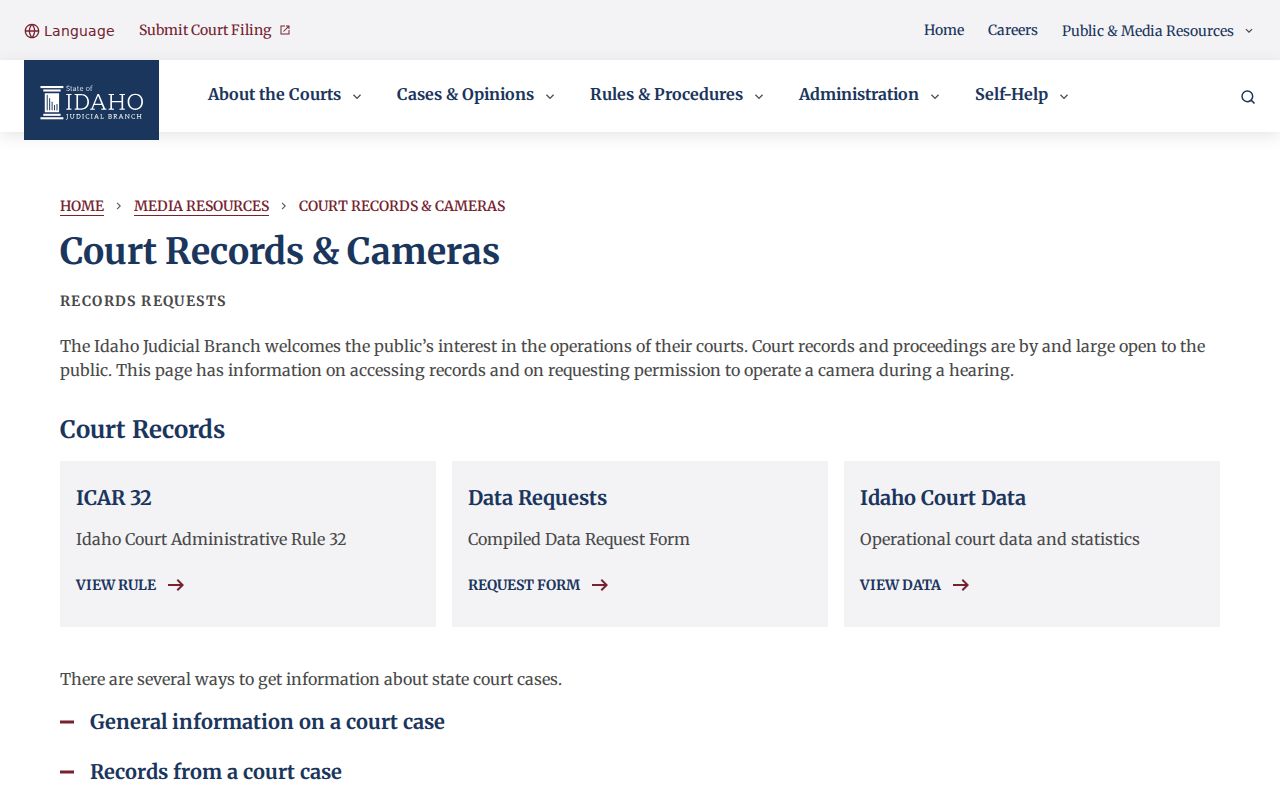
The state instructions make the kiosk and Oneida clerk the proper fallback when remote search stops at a summary.
Stages of a Criminal Case
An Oneida County case may start with an investigation, citation, or arrest. A judge then reviews custody and charges at an initial appearance. A felony commonly includes a preliminary hearing unless waived, followed by a prosecutor's information and District Court arraignment. Pretrial motions can address evidence, procedure, or release. The case then reaches a plea, trial, dismissal, or other disposition. A conviction proceeds to judgment and sentence, and later activity may include appeal or post-conviction filings.
Case flow: Charges Filed › Arraignment › Pretrial › Plea or Trial › Disposition › Sentencing
The docket is chronological. A hearing set on one date may be continued, and a plea entry can precede the written judgment. Follow the entries through the final signed order.
Reading Oneida Criminal Case Events
Short docket labels can hide key differences. An arraignment is the hearing where the accused hears and answers the charge. A disposition is the result of a case or count. A judgment is the court's formal decision, often paired with the sentence. A dismissal ends a charge without a conviction. None of those terms means the same thing as booking.
- Complaint
- A sworn charging allegation that starts the court record.
- Information
- A prosecutor-filed felony charging document.
- Disposition
- The result for a case or individual count.
- Judgment
- The formal adjudication and sentence entered by the court.
- Shielding
- A Clean Slate restriction on public view, not destruction of the official file.
For a complete outcome, match the disposition on each count to the judgment and any later amended order.
Access & Restrictions
Idaho Court Administrative Rule 32 presumes broad access to judicial records but excludes defined material. Presentence reports, pretrial risk assessments, unreturned-warrant support, protected victim or minor information, and personal identifiers are not ordinary public records. Juvenile, sealed, and Clean Slate shielded matters can also be absent. The public portal may redact fields even when a clerk can confirm that an open file exists.
Rule 32 generally gives the custodian three working days to provide, deny, or refer a request, with notice when up to ten working days is needed.
Describe the Oneida County case number, document, and date range when contacting the clerk. If the issue began with an arrest, compare the court outcome with the agency and booking sources described in Oneida County arrest history. Never infer guilt from a filed allegation alone.